-
What Are The Rules on Copyrighting Your Artwork?
I wrote this article a few years ago and thought it might be interesting to visitors of this site. Art Copyright – What To Do Many artists wonder what they need to do in order to keep the copyright of their artwork so in this article I will attempt to explain exactly that. Firstly I will say that I am not a lawyer but an artist but I wanted to share some information that I have learnt about copyright and art so feel free to add more info or comments if there is something I have missed. If you work as a photographer, artist, sculptor etc then one key thing…
You May Also Like

100+ Titles For Abstract Paintings
-
New Style of Painting
So after setting up the subscribe option on this website, almost as an experiment, I have been surprised by the number of subscribers that I already have! This makes me question what the subscribers want to hear about (please feel free to share your thoughts below) and hence what to write about. So I have decided to make this a bit more of a personal art blog, sharing information about how I create my paintings and also any experiments that I carry out into new techniques, and hope that I talk about things that interest, and even open up a dialogue with other artists. So this post is mostly about…
-
Creating a Textured Abstract Painting
Ok so I have finished the video of the creation of a new painting for my lounge. Obviously I couldn’t video every minute of creating the painting as the video would have been too long! Often I spent time just painting over and over to get the right effect. For me the key here is layers of paint, the more layers the better, until you feel like it is finished. The other key point is not to add any colour neat (apart from white), always try and partially mix it with another colour. This is the finished result, it is similar in style to the header image on this website:…
-
New Video Coming
A while back I made a video of how to create a swirled abstract painting in acrylics and uploaded it to YouTube. I’ll share the link in case you are interested. As it has become really popular I thought I would also create a video of ‘how to create an abstract painting for your home’ using some of the texture I mention on this website. So I’m in the process of doing that right now and will upload it as soon as it’s done. The painting I am creating is for my own home as I am in the process of selling it and I think custom made artwork is…
-
Tissue Paper for Texture
If you want a quick and easy way to add texture to your paintings then you can use tissue (the type you blow your nose on!) or tissue paper. ideally you would use PVA to apply the tissue to the canvas but if you don’t have any then you can just use acrylic paint. Either put the tissue on top of the wet paint or add the tissue to the paint and apply it to the canvas – you could also add a little water if it is a bit thick with the tissue in. Just leave it to dry (ideally overnight) and you have a good base to paint…
-
Great Texture Additive!
So I had some lessons a number of year ago from an abstract artist who also used a lot of texture in his paintings. I was already working as an abstract artist at that point in time but I always think that you can learn plenty of new tips and tricks from other artists on how they create their texture and their paintings. I definitely learnt things from this guy. One tip he had was to use sawdust to add texture to his paintings. You can use this by adding it to gesso or to PVA or add it tot he texture mix that I have detailed in this website.…
-
Decorator’s Caulk for Paintings
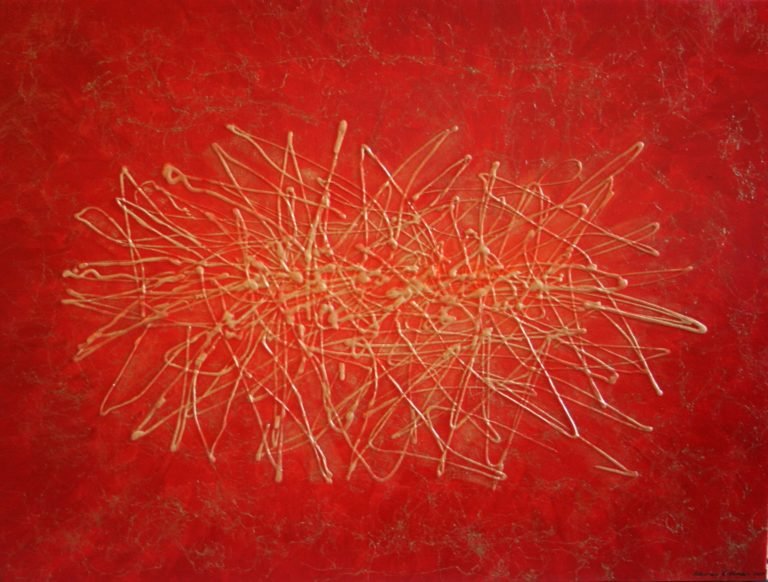
A few years ago I picked up some tubes of squeezable decorators caulk to try out on creating some shapes and lines on some paintings. They turned out quite well and it is really easy to use. It is quite a flexible substance so it works well on canvas and it is easy to apply. Once it is dry you can paint it (I think I pretty much used only acrylic paint at that time but I expect if you applied a coat of acrylic and then used oil on top it would work perfectly well too) and with the raised surface it is easy to apply something like gold…
-
New Paintings with Heavy Texture
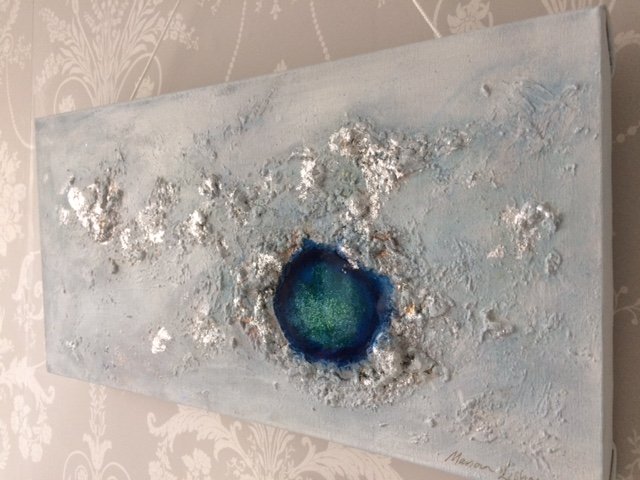
These last couple of weeks I have been working on a new set of paintings that have some really heavy texture on them. I used the stucco and PVA mixture but I had a tub of slightly old stucco that was starting to get a bit dry at the edges. However, I made the most of this by using the dried up pieces as big chunks in the paintings. The paintings are based on some images that I have screenshotted from Google Earth. Nothing works better in my mind than using natural colours that you see in everyday nature. Ok so I tweaked them a bit and they are supposed…
You May Also Like
Step by Step Textured Painting
-
Using a Small Amount of Texture
So sometimes less is more but adding a small amount of texture to your paintings can really enhance the final look. For this painting I used a small amount of texture in the white splash of waves – some of it was quite thick – to give the enhanced effect of the waves crashing. It turned out really well and I am now working on a smaller version.
-
Texturing Over Old Paintings
So with my texture mix you can reuse old paintings that no longer work for you. You can use gesso to do this too, particularly with acrylic paintings. But if you have oil paintings that have dried out completely (I’m talking years) then it is pretty safe to put a good layer of texture over the top before repainting. I hate wasting canvases but if something doesn’t sell or I am just not happy with it then it has to go!
You May Also Like
Step by Step Textured Painting